A Compton Customer's Rear-End Collision That Was Far More Than a Bumper Job
A Compton, California driver brought their 2019 Honda Accord to us after being rear-ended — and what looked like a straightforward bumper repair turned into one of the more technically demanding structural jobs we've handled. The customer called Fix Collision Auto Body, and we arranged tow truck transport directly from their residence to our facility at 18403 Eddy Street, Northridge, CA 91325.
From the outside, the damage appeared confined to the rear bumper assembly — the kind of impact that drivers and even some shops might assume is cosmetic. That assumption, had we accepted it, would have put this vehicle back on the road in an unsafe condition.
By the time our technicians completed a thorough disassembly and inspection, the true scope of the damage was clear: hidden structural damage to the rear rail, compromised body panels, and safety systems that required recalibration. The final repair involved OEM parts, factory-matched paint, ADAS calibration, and a full wheel alignment. The State Farm insurance claim covered a $9,000 repair, and the Accord was back on the road in 21 days.
This case study details every stage of that repair — so drivers in Compton and across Los Angeles understand exactly what a proper collision inspection can uncover, and why skipping that step is never worth the risk.
By the Numbers: What This Repair Involved
Vehicle: 2019 Honda Accord — rear-end collision repair completed at our Northridge facility for a Compton-based customer. Insurance carrier: State Farm. Total repair cost: $9,000. Turnaround: 21 days from tow-in to customer delivery.
The scope of work extended well beyond the initial visible damage. Three core components drove the complexity: the full rear bumper assembly, the rear body panel, and the rear rail — that last one is what pushed this from a body repair into full structural territory. Every part used was genuine OEM Honda, ensuring the vehicle returned to factory-specification tolerances rather than aftermarket approximations. Fresh paint with computerized color matching restored the exterior finish seamlessly.
Two safety-critical systems required post-repair attention that many shops overlook: the ADAS system was fully recalibrated to restore rear sensors and driver-assist functions to factory performance, and a four-wheel alignment was performed to correct any geometry shifts caused by the structural damage.
As the technicians progressed through each phase of the repair, they worked from ALLDATA OEM manufacturer procedures — the same repair information Honda itself publishes — covering the exact repair sequence, access procedures, and structural replacement steps specific to the 2019 Accord platform.
The customer drove away in a vehicle restored to OEM structural integrity. For drivers in Compton considering where to take a rear-end collision claim, this repair is a concrete example of what a thorough, properly documented process looks like in practice — every stage inspected, documented, and completed to manufacturer specification. Contact our team at +1 (818) 448-1546 for a free estimate on any collision damage.
Stage 1: Initial Inspection Reveals the First Layer of Damage
When the 2019 Honda Accord arrived at our Northridge facility, the initial walk-around confirmed what the customer described: rear bumper assembly damage showing scuffing, cracking, and deformation consistent with a direct rear-end impact. That external picture told only part of the story.
Visible damage is never the finish line — not at Fix Collision Auto Body. Disassembly of the rear bumper assembly is standard practice here, not optional, because collision force routinely travels through exterior components into the structure beneath them. Pulling the bumper off revealed damage to the underlying rear body panel that had been completely hidden from view — the kind of damage that never shows up in a photo estimate or a quick walk-around appraisal.
This is exactly the scenario where a surface-level estimate fails the customer. If a shop simply replaces the bumper and calls it done, they're sending a structurally compromised vehicle back onto the road — and the driver has no idea.
Documenting the rear body panel damage at this stage was essential for two reasons: it allowed accurate communication with State Farm so the repair scope reflected what the vehicle actually needed, and it set the foundation for the deeper structural inspection that the next phase would require. What disassembly uncovers shapes the entire repair — a parking lot walk-around will never give you that picture. That's the reality of how a proper collision repair process works.
Stage 2: Hidden Structural Damage — The Rear Rail Discovery That Changed Everything
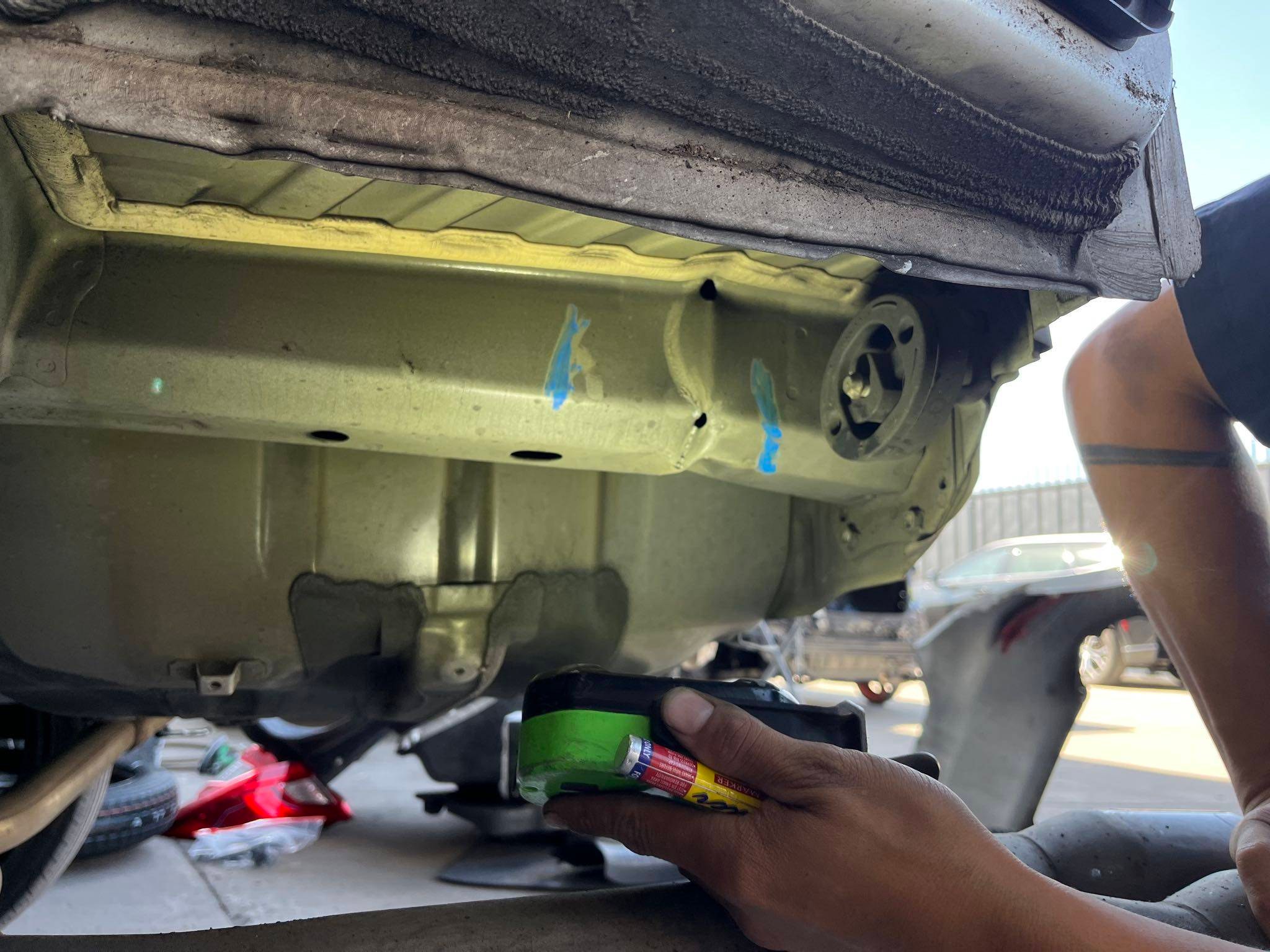
With the rear body panel removed, our technicians reached the structural layer of the 2019 Accord — and what they found there changed the entire trajectory of this repair. The rear rail, one of the vehicle's primary load-bearing structural members, had sustained significant damage from the collision force that traveled through the bumper and body panel before our inspection team ever saw the car.
Damage to the rear rail goes well beyond aesthetics. This component defines the vehicle's crash protection geometry — it governs how impact energy is absorbed and redistributed in a future collision. A car returned to the road with a compromised rear rail is measurably less safe than one restored to factory specification, regardless of how clean the bumper looks.
At this point, the repair scope shifted from a body repair to a full structural repair. Rear rail replacement on a 2019 Honda Accord requires removal of the rear suspension assembly, controlled access through the rear quarter panel area, precise installation and alignment of the replacement structural component, and a repair sequence sourced entirely from ALLDATA OEM manufacturer procedures — not general shop practice.
Immediately after the discovery, our team informed the customer of the updated damage findings. The revised repair plan was submitted to State Farm, and our team transitioned into the structural repair phase. Drivers across Compton who want to understand what this process looks like for their own vehicle can reach us at +1 (818) 448-1546 for a no-obligation inspection. Our frame and structural repair process follows this same documentation standard on every job.
Stage 3: The Technical Work — Rear Rail Replacement Step by Step
Replacing a rear rail on a 2019 Honda Accord is not a pull-and-bolt operation. The repair required a precise, multi-stage disassembly sequence before the damaged structural component was even accessible. Our technicians began by removing the rear suspension assembly entirely — not to repair it, but because it physically blocks access to the rail's attachment points. Controlled cuts through the rear quarter panel area, specified exactly in the ALLDATA Honda repair procedure, followed.
Once access was achieved, the damaged rear rail section was cut out and the OEM replacement structural component was installed. Alignment to factory dimensional specifications was verified with measuring equipment before a single reassembly fastener was set. That verification step is non-negotiable — an improperly aligned rail that passes a visual inspection can still place the vehicle outside factory crash geometry tolerances.
Reassembly followed the reverse sequence: suspension reinstalled, quarter panel area repaired, OEM rear body panel replaced, and the full rear bumper assembly installed with fresh factory-matched paint. The final two steps addressed the vehicle's safety systems directly. Because the 2019 Accord integrates rear-facing sensors and camera systems into and near the bumper assembly, ADAS recalibration was mandatory — not optional — to restore those systems to factory accuracy. A four-wheel alignment completed the mechanical scope and confirmed the vehicle's geometry was correct before delivery.
Why ALLDATA OEM Repair Procedures Made the Difference on This Job
Modern unibody vehicles like the 2019 Honda Accord are engineered with structural repair specifications that are unique to that platform — specific cut lines, weld sequences, and attachment procedures that no technician can reliably reconstruct from general experience alone. A structurally compromised installation that looks correct from the outside can still leave the vehicle outside factory crash-energy tolerances.
ALLDATA provided our technicians with the exact Honda-published repair sequence for this rear rail replacement: where controlled cuts through the quarter panel were permitted, the order in which structural components had to be removed and reinstalled, and the manufacturer-specified attachment procedures for the replacement rail. These are not judgment calls — they are decisions the vehicle's engineers documented, and accessing that documentation is what separates a repair performed to manufacturer standard from one performed by feel.
A common question is whether experienced technicians can manage structural repairs without OEM data. The honest answer is that experience helps execution, but only the manufacturer's procedure defines what correct actually means for that specific platform. For this Accord, ALLDATA removed ambiguity from every structural decision our team made.
We are grateful to ALLDATA for the detailed repair information that allowed our technicians to approach this complex job with the precision this customer's vehicle deserved. Insurance carriers like State Farm, USAA, and Travelers Insurance — all direct-claim partners of Fix Collision Auto Body — expect repairs to meet exactly this standard, and ALLDATA is how we consistently meet it.
Types of Collision Damage We Handle at Fix Collision Auto Body
The 2019 Accord case illustrates one collision type — but the full range of damage our Northridge shop handles is considerably broader, and knowing which category your vehicle falls into helps you understand what a proper repair actually requires.
Rear-end collision repair — as demonstrated in this case study — can involve bumper assemblies, rear body panels, rear rail replacement, trunk structure, tail light assemblies, rear sensor recalibration, and alignment. Impact speed and angle determine how deep the damage travels.
Front-end collision repair addresses hood, grille, radiator support, front rail, headlight assemblies, and front bumper damage — and frequently includes airbag system evaluation and front ADAS camera recalibration, since front-facing driver-assist sensors are directly in the impact zone.
Side-impact and door damage repair requires assessment of door panels, rocker panels, B-pillar integrity, side curtain airbag deployment, and quarter panels. Side impacts can compromise door intrusion structure even when the exterior damage looks manageable.
Frame and unibody straightening is performed when primary structure has shifted from factory dimensions — requiring computerized measuring and precision pulling equipment before body work begins. Our frame straightening process restores factory geometry first, every time.
We also handle hail and storm damage, scratch and scuff repair, bumper repair and replacement, fender repair, and paintless dent repair — for damage that stays cosmetic but still deserves professional restoration.
What to Do After a Rear-End Collision in Compton or Los Angeles
The steps you take in the first hour after a rear-end collision directly affect both your safety and your claim outcome. Follow these four steps.
Step 1 — Document everything before vehicles move. Photograph all visible damage from multiple angles, capture the other vehicle's position, and collect the other driver's insurance information on the spot. If hidden structural damage surfaces later — as it did on this Accord — those scene photos become critical evidence supporting your claim.
Step 2 — Contact your insurance carrier and assert your right to choose your shop. Under California law, you have the right to select your own repair facility regardless of what your insurer suggests. State Farm, which covered this repair, and every other carrier we work with must honor that choice.
Step 3 — Do not drive the vehicle. If there is any chance of structural damage, driving compounds it. Fix Collision Auto Body coordinates tow truck transport directly from your Compton address — or anywhere else in Los Angeles — to our Northridge facility.
Step 4 — Demand a full disassembly inspection. A visual estimate misses what this Accord's bumper was hiding. Call us at +1 (818) 448-1546 to schedule a proper inspection — the kind that finds the damage before it finds you on the road.
Serving Compton and the Surrounding Los Angeles Communities
Fix Collision Auto Body serves Compton drivers from our Northridge facility, and we regularly handle vehicles from neighboring communities including Lynwood, Carson, Gardena, Hawthorne, Inglewood, and South Los Angeles. When a damaged vehicle cannot be driven safely, we arrange tow truck transport directly from the customer's location — exactly as we did for the Compton customer in this case study.
Compton drivers who travel the 710, 91, 105, and 110 freeways daily know how quickly stop-and-go traffic turns into rear-end collisions. These are among the busiest corridors in Los Angeles County, and the pattern of damage they produce — structural impact hidden beneath surface-level bumper damage — is precisely what this case study documents.
Our facility at 18403 Eddy Street, Northridge, CA 91325 is accessible from the 118 Freeway and serves as a regional repair center for customers across the San Fernando Valley, South Bay, and greater Los Angeles County. Drivers from nearby communities throughout the region trust us to handle repairs that smaller local shops cannot properly assess or complete. We also assist customers throughout the process in both English and Spanish — walking you through the insurance scope, repair timeline, and documentation in whichever language you prefer. Insurance carriers including State Farm, USAA, Allstate, and Farmers Insurance are accepted directly. Call our office to arrange tow transport or schedule a free estimate.
Working With State Farm and Over 100 Insurance Carriers on Collision Claims
This Honda Accord repair was handled entirely through a State Farm direct claim — our team managed all communication with State Farm from the initial estimate through the supplemental structural damage documentation, so the Compton customer never had to negotiate scope changes on their own. When hidden rear rail damage expanded the repair beyond the original bumper assessment, we submitted the updated documentation directly and kept the process moving.
Fix Collision Auto Body works directly with more than 100 insurance carriers across California. National carriers including GEICO, Allstate, Progressive, Farmers, USAA, Liberty Mutual, Nationwide, and Travelers are all accepted, as are California-regional carriers like Alliance United, Wawanesa Insurance, Bristol West, Topa Insurance, and Workmen's Auto Insurance. Whether your policy is with a large national insurer or a regional California carrier, our team knows how to work within that claims process efficiently.
Our insurance claim assistance is completely free — we handle the estimate, supplemental damage documentation, and direct billing. Drivers from communities like North Hollywood and Canoga Park who have gone through the claims process with us know that the paperwork never lands on their desk. Call our office to get started.
The Reader Takeaway: What This Honda Accord Repair Proves About Collision Inspections
This 2019 Honda Accord arrived looking like a bumper replacement job. It left as a complete structural repair — rear rail replaced, OEM parts installed, paint refinished, ADAS recalibrated, alignment corrected — because that is what the vehicle actually needed to be safe on the road. The difference between those two outcomes is a proper inspection.
A $9,000 structural repair completed correctly through insurance is a fundamentally better outcome than a $2,500 bumper swap that leaves a compromised rear rail in place. The rear rail does not protect the car — it protects the people inside it. A vehicle that looks repaired but is not structurally restored fails at precisely the moment its occupants need it most.
The honest lesson here is simple: what you see after a rear-end collision is almost never the full picture. Hidden damage does not advertise itself, and no photo estimate or parking-lot walk-around will find it. Only disassembly and a technician who knows what to look for will.
If your vehicle was rear-ended anywhere in Compton or the greater Los Angeles area, call Fix Collision Auto Body at our office or visit us at 18403 Eddy Street, Northridge, CA 91325. Let us inspect it properly — before anyone draws conclusions about what the repair should cost or how long it should take. Learn more about our full collision repair process and what a thorough assessment includes.
Frequently Asked Questions
What does it take to properly repair hidden structural damage after a rear-end collision?
Properly repairing hidden structural damage requires full disassembly of the damaged area, not just replacement of visible exterior parts. On this 2019 Honda Accord, that meant removing the bumper assembly, then the rear body panel, before the damaged rear rail became visible at all. From there, the repair required removing the rear suspension assembly, controlled access through the rear quarter panel, installation of an OEM replacement rail, and verification against manufacturer-published procedures from ALLDATA. Skipping any of those steps leaves the vehicle structurally compromised even if the exterior looks repaired.
Why did a rear-end collision repair on a 2019 Honda Accord cost $9,000?
The $9,000 repair cost reflected the true scope of structural damage that was only visible after disassembly — not just the bumper damage visible at first glance. The job included replacing the rear bumper assembly, rear body panel, and rear rail, using genuine OEM Honda parts throughout. Factory-matched paint, ADAS recalibration, and a four-wheel alignment were also required to return the vehicle to pre-accident condition. Collision repairs that appear minor on the surface can carry significant costs once hidden structural damage is properly documented and repaired.
Will State Farm cover structural collision repairs like rear rail replacement?
Yes — State Farm covered the full $9,000 repair cost on this 2019 Honda Accord, including the rear rail replacement and all associated structural work. The key is accurate documentation: the repair shop must disassemble the vehicle, identify all damage, and submit a complete revised estimate that reflects what was actually found rather than what appeared visible at intake. Fix Collision Auto Body works directly with State Farm and can handle the claims process on the customer's behalf from estimate through completion.
How long does a structural rear-end collision repair typically take?
This 2019 Honda Accord went from tow-in to customer delivery in 21 days, which reflects the actual time required for a thorough structural repair rather than a rushed exterior fix. That timeline included rear rail replacement, suspension removal and reinstallation, OEM parts sourcing, paint refinishing, ADAS calibration, and alignment. Repairs involving hidden structural damage always take longer than surface-level bumper jobs — and that additional time is what separates a vehicle returned to factory safety standards from one that simply looks repaired.
What is ADAS calibration and why is it needed after a rear-end collision?
ADAS calibration is the process of resetting and verifying a vehicle's advanced driver-assistance system sensors — including rear parking sensors, blind-spot monitors, and collision warning systems — to manufacturer-specified performance after collision repair. A rear-end impact can shift or damage the hardware these sensors rely on, and reassembling the vehicle without recalibrating them leaves the driver with safety features that appear to function but may not respond accurately. On this Accord, ADAS calibration was performed as part of the final repair to ensure every system worked to factory specification before the vehicle left the shop.
Can a rear-end collision damage the frame or structure even if the bumper looks like the only thing that was hit?
Yes — and this Honda Accord repair is a direct example of exactly that scenario. The bumper absorbed the initial impact, but collision force transferred through it into the rear body panel and then into the rear rail before anything was disassembled. None of that structural damage was visible from the outside. Drivers in Compton and across Los Angeles who accept a photo estimate or a quick walk-around appraisal after a rear-end hit risk returning to the road in a vehicle that has lost significant crash protection without knowing it.
Do collision repair shops in the Los Angeles area accept insurance claims directly, or does the customer have to manage the process?
Fix Collision Auto Body handles insurance claims directly with all major carriers — including State Farm, GEICO, Allstate, Progressive, Farmers, Mercury, USAA, Liberty Mutual, Nationwide, and Travelers — so the customer does not have to navigate the claims process alone. On the Compton Honda Accord job, the shop communicated directly with State Farm when the repair scope expanded after structural damage was discovered during disassembly, submitting a revised estimate that reflected the actual damage found. Customers can reach the team at our office to start a claim or get a free estimate.
Is it safe to drive a car back to Compton from a collision repair shop in Northridge after structural work?
After proper structural repair, ADAS recalibration, and wheel alignment — all completed on this Accord before delivery — the vehicle is fully safe to drive. Fix Collision Auto Body arranged tow truck transport from the customer's Compton residence to the Northridge facility at intake precisely because driving a vehicle with suspected structural damage is not safe before a proper inspection. Once the repair was complete and every system verified, the customer drove the Accord home without restriction.
Get In Touch With Fix Collision Auto Body
Have a question or need a quote? We'd love to hear from you.
Contact Fix Collision Auto Body
Send us a message and our team will get back to you within 24 hours.
-
Call Us
-
Response Time
Within 24 hours